Top Tips for Choosing the Right Board To Board Connector?
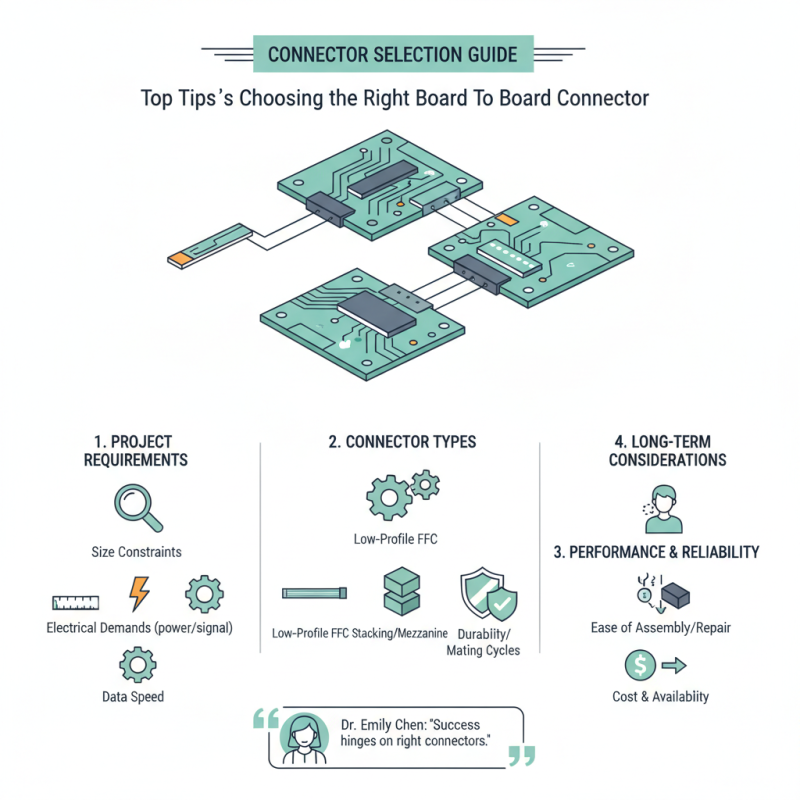
Choosing the right Board To Board Connector is crucial for any electronics project. According to industry expert Dr. Emily Chen, "The success of your device often hinges on selecting the right connectors." This statement emphasizes the significance of making informed decisions when it comes to these components.
Board To Board Connectors facilitate communication between different circuit boards. They come in various designs and specifications, each with unique advantages. Selecting the appropriate type can greatly impact performance and reliability. For instance, options vary from low-profile connectors to robust high-speed models. Each choice influences design flexibility and space optimization.
Many engineers overlook the importance of this decision. Poor connector choices can lead to device failures or suboptimal performance. Understanding the specific requirements of your project, such as size constraints and electrical demands, is key. A mismatch can result in costly revisions and delays. Thus, thoroughly evaluating the options is essential for successful integration and functionality.
Understanding Board-to-Board Connectors: Types and Applications
Board-to-board connectors are essential in many electronic applications. They offer a reliable means to connect multiple circuit boards. Understanding the different types of these connectors can help ensure you select the best option for your needs.
When choosing a board-to-board connector, consider the applications they will serve. There are connectors designed for horizontal or vertical arrangements, each with unique advantages. For example, vertical connectors save space in compact devices but may be harder to assemble. Improper selection can lead to mechanical failures, so it's critical to match the connector to the intended design.
Tips for selecting connectors include assessing the required pitch. A smaller pitch may enhance density but can complicate soldering. Always evaluate the connector’s power needs and current ratings. Overlooking these factors might result in overheating or malfunction. Testing your choice in prototypes can uncover issues before full-scale production. Each application is distinct, so customization may be necessary.
Key Factors to Consider When Selecting Board-to-Board Connectors
When selecting board-to-board connectors, several key factors come into play. Understanding the dimensions is crucial. The height between boards should easily accommodate components mounted on either side. Failing to consider this can lead to significant design flaws. Additionally, the connector's pitch, the distance between pins, affects the overall functionality. A tighter pitch allows for more connections but can complicate assembly.
Electrical performance is another major aspect. Proper current ratings and voltage specifications must align with application requirements. Neglecting these can result in overheating and connection failures. Another point to ponder is the mechanical loading capabilities. Some connectors may not withstand heavy stress or high mating cycles. This oversight can lead to premature connector failure.
Don’t forget environmental factors either. Many connectors are designed for specific conditions like moisture, dust, or extreme temperatures. Selecting the wrong type could spell disaster in harsh environments. Connectivity methods also vary; solder, press-fit, or other assembly methods may influence your choice. It’s often a balance between ideal performance and practical application. Reflecting on these details can sharpen your selection process for optimal results.
Top Tips for Choosing the Right Board To Board Connector
| Key Factor |
Description |
Considerations |
| Pitch Size |
The distance between the pins or pads. |
Select a pitch that fits your board design. |
| Number of Positions |
The total number of connections required. |
Ensure the connector can accommodate your needs. |
| Current Rating |
The maximum current the connector can handle. |
Match the current rating with your application requirements. |
| Operating Temperature |
The temperature range in which the connector can operate. |
Consider environmental conditions in your application. |
| Mounting Style |
Surface mount vs. through-hole. |
Choose based on PCB design and assembly process. |
| Mating Cycles |
The number of times the connector can be reused. |
Assess the longevity required for your application. |
| Shielding Options |
Options for electromagnetic interference protection. |
Consider if shielding is necessary for performance. |
Evaluating Electrical Specifications for Connector Performance
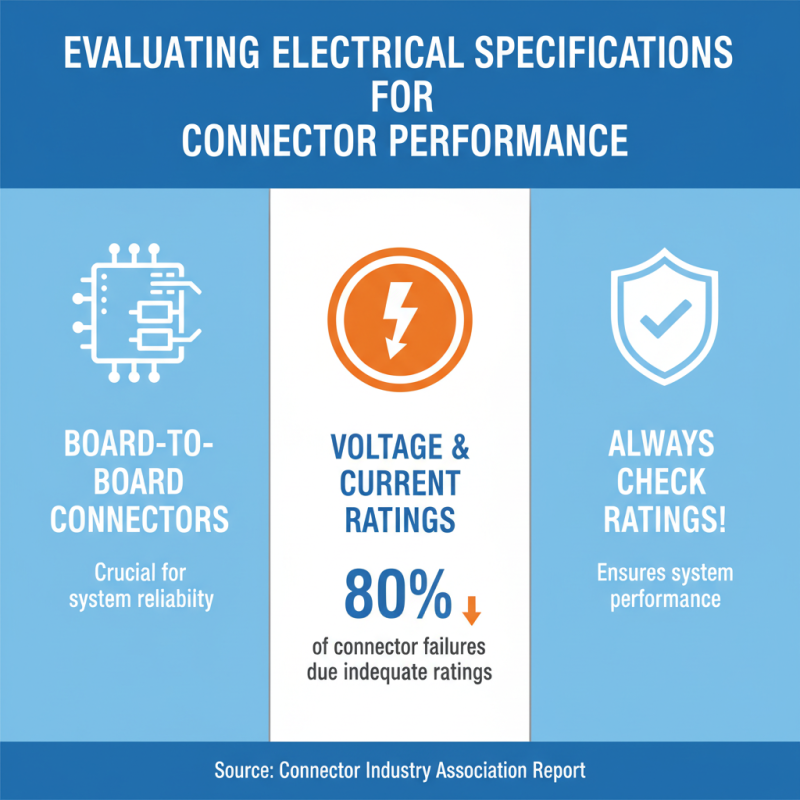
When selecting a board-to-board connector, electrical specifications play a critical role. Understanding these specifications is crucial for ensuring system reliability and performance. According to a report by the Connector Industry Association, nearly 80% of connector failures arise from inadequate voltage and current ratings. Therefore, always check the rating details before making a decision.
Consider the environment where the connector will be used. If it’s in a high-frequency application, the impact of capacitance and inductance becomes significant. Reports indicate that excessive capacitance can lead to signal degradation. Aim for low-capacitance connectors to maintain signal integrity.
Tip: Verify the temperature range! Many connectors fail under extreme conditions. Always confirm that the selected connector can withstand operational temperatures.
Additionally, an underappreciated aspect is the mechanical stability of connectors. Ensure they are capable of enduring repeated mating cycles. Research shows that connectors rated for 1000 cycles can save costs in the long run compared to lower-rated options.
Tip: Look for connectors with keying features to prevent mismating. This adds a layer of reliability and reduces potential issues in assembly. Understanding these specifications will enhance the design process, ensuring alignment with project goals.
Assessing Physical Parameters: Size, Pitch, and Mounting Style
When selecting a board-to-board connector, physical parameters are crucial. Size is one of the first aspects to consider. The dimensions of a connector will determine its compatibility with existing designs. According to industry reports, connectors should fit snugly within the designated PCB space. A mismatch can lead to circuit failures.
Pitch is another important factor. The pitch, or the distance between pins, directly affects the density of components. A smaller pitch can allow for more connections in tight spaces. Data indicates that a 0.5mm pitch provides a balance between compact design and reliable connections. However, it can also complicate soldering processes, requiring precision.
Mounting style is equally significant. There are surface mount and through-hole connectors available. Surface mount allows for more design flexibility. Yet, through-hole connectors often provide better mechanical stability. Each style has its strengths and weaknesses. Designers must carefully evaluate the requirements of their project. The choice of connector can impact performance and ease of assembly. The best approach often involves trial and iteration in design.
Top Tips for Choosing the Right Board To Board Connector
Industry Standards and Compliance for Board-to-Board Connectors
When selecting board-to-board connectors, industry standards play a crucial role. Compliance with established guidelines ensures reliability and performance. Connectors must meet specifications outlined by industry authorities. These standards cover aspects like durability, signal integrity, and thermal performance.
Different applications might require unique characteristics. Often, engineers prioritize factors like voltage ratings and current-carrying capacity. Understanding the specifics of your application helps in making the right choice. Testing the connectors in real-world conditions is essential. It reveals how they perform under stress, which may not always align with theoretical expectations.
Awareness of compliance standards isn't just a box to check. It reflects on the overall quality and longevity of the final product. A connector that doesn’t comply can lead to failures. Such issues often arise from poor manufacturing processes or materials. Hence, while selecting a connector, consider both compliance and the experience of the manufacturer. This approach helps mitigate risks associated with connector failures.

 Email
Email WeChat