Top In Out Connector Solutions for Global Buyers?
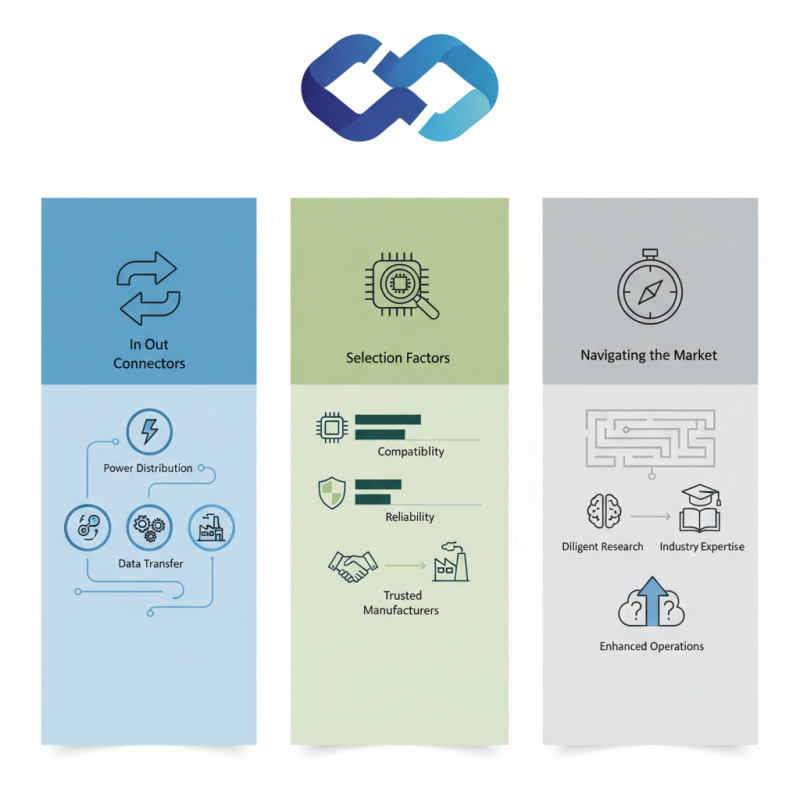
The demand for reliable In Out Connector solutions continues to grow in various industries worldwide. These connectors play a pivotal role in ensuring efficient power distribution and data transfer. As companies strive to enhance their operations, selecting the right connector is vital.
In Out Connectors come in numerous designs and specifications. Each design serves distinct applications, from automotive to telecommunications. A buyer must assess compatibility and reliability when choosing these components. It’s essential to partner with trusted manufacturers who prioritize quality and innovation in their products.
Despite the available options, the market can be overwhelming. Buyers often face confusion regarding product specifications and standards. This underlines the importance of diligent research. By focusing on industry expertise, one can navigate the complexities of In Out Connector selection more effectively.
Overview of In Out Connectors and Their Applications
In-Out connectors play a crucial role in various industries. They facilitate the transfer of data and power in electronic devices. The global market for these connectors is projected to reach USD 18 billion by 2026, according to industry reports. A significant growth factor is the increasing demand for efficient connectivity in automotive and telecommunications applications.
Applications of In-Out connectors span multiple domains. In the automotive sector, for instance, they ensure reliable connections within increasingly complex electrical systems. In telecommunications, they help maintain seamless communication amidst growing data traffic. Yet, challenges persist. The rapid advancement in technology sometimes outpaces connectors' development. Manufacturers must constantly innovate to keep up with market demands.
Additionally, quality and reliability are often inconsistent across suppliers. This inconsistency can lead to failures in critical applications. Reports suggest that 25% of connector failures can be attributed to manufacturing defects. Hence, buyers must focus on reliable sources. Investing in high-quality In-Out connectors is essential for ensuring device performance and longevity.
Key Features to Consider When Selecting In Out Connectors
When selecting in-out connectors, several key features should be prioritized. Contact configuration is essential. A reliable connector offers various contact arrangements to fit specific applications. Compatibility with different voltages and currents is also crucial. According to industry reports, approximately 78% of connector failures stem from poor compatibility. Thus, understanding a connector's specifications is vital for ensuring performance and longevity.
Another significant factor is environmental resilience. In sectors like aerospace and automotive, connectors must withstand extreme conditions. For instance, connectors with high-temperature ratings can perform better in harsh environments. Research indicates that connectors with proper insulation and sealing can enhance durability by up to 30%.
Tips: Look for connectors with multiple mounting options. This flexibility can aid in versatile installations. Always check for certifications that guarantee quality. Being aware of the connector's tensile strength can help prevent potential issues. Prioritizing these features will lead to more reliable connections and reduce maintenance costs over time.
Top In Out Connector Solutions for Global Buyers
This chart highlights key features to consider when selecting In Out connectors, rated on a scale of 1 to 10 based on their importance to global buyers.
Popular Types of In Out Connectors for Global Markets
In the ever-evolving landscape of global connectors, in-out connectors stand out due to their versatility. Reports indicate that the global connector market is projected to reach $100 billion by 2025, with in-out connectors playing a crucial role in this growth. These connectors facilitate seamless connections in various applications, enhancing electronics, automotive, and industrial machinery.
Popular types of in-out connectors include circular, rectangular, and modular variants. Circular connectors, often used in harsh environments, offer durability and reliability. Rectangular connectors, on the other hand, are favored for their compact design and ease of installation. A recent industry survey highlighted that modular connectors are gaining traction, particularly in telecommunications, owing to their adaptability to different configurations.
Challenges remain, however. The integration of emerging technologies poses questions about compatibility and standards. Additionally, supply chain disruptions can impact the availability of specific connector types. Buyers need to assess their needs carefully. Understanding the nuances of each type is essential for making informed decisions in this competitive market.
Leading Manufacturers of In Out Connectors Worldwide
In the global market, in-out connectors are essential for various applications. They ensure stable connections in electronics, telecommunications, and industrial machinery. Current market reports indicate the in-out connector segment is growing steadily, with a projected CAGR of 6.5% from 2021 to 2026. This growth emphasizes the importance of reliable manufacturers in providing high-quality solutions.
Leading manufacturers are focusing on technological innovations. They are adopting materials that enhance performance and durability. For instance, the demand for lightweight and corrosion-resistant connectors is rising. The trend towards miniaturization in devices also shapes industry standards. Companies are investing in R&D to meet these needs.
Tip: When selecting an in-out connector, consider the environment it will operate in. Temperature fluctuations and exposure to corrosive elements can affect performance. Testing products under various conditions can lead to better, long-lasting choices.
Another crucial factor is compatibility. Ensure that connectors match the devices they will connect to. Mismatches may cause operational failures. This is particularly important in sectors where precision is critical.
Regularly reviewing supplier options can benefit buyers. This approach helps identify reliable manufacturers committed to quality. The in-out connector landscape is evolving; staying informed is vital for making smart procurement decisions.
Future Trends in In Out Connector Technology and Design
The field of In Out connector technology is rapidly evolving. Recent reports indicate a projected growth of 6.5% annually in this sector. This growth is driven by increasing demand across various industries, including automotive, telecommunications, and consumer electronics. The rise of the Internet of Things (IoT) is a significant factor. Enhanced connectivity is vital for smart devices, creating a need for reliable connector solutions.
Innovations in material science are reshaping connector design. Lightweight, durable materials can improve performance while reducing weight. As industries move toward miniaturization, connectors must accommodate smaller sizes without sacrificing reliability. Reports highlight that over 70% of companies seek connectors that can withstand harsh environments. Enhanced waterproofing and temperature resistance are becoming critical design parameters.
In discussing future trends, sustainability emerges as a crucial consideration. Manufacturers are exploring eco-friendly materials and energy-efficient production methods. However, the transition to sustainable practices poses challenges, including cost and supply chain complexities. Balancing innovation with responsibility is a topic worth examining. As connector technology progresses, stakeholders must address these issues to foster a more sustainable future.
Top In Out Connector Solutions for Global Buyers - Future Trends in In Out Connector Technology and Design
| Connector Type |
Application Area |
Key Features |
Future Trends |
| Circular Connectors |
Industrial Automation |
Robust design, high resistance to environmental factors |
Integration with IoT technology, increasing demand for smart automation |
| Rectangular Connectors |
Telecommunications |
High-density, customizable configurations |
Advancements in miniaturization and modular designs |
| Fiber Optic Connectors |
Data Centers |
High speed, low loss signal transmission |
Growth in high-bandwidth applications and 5G networks |
| USB Connectors |
Consumer Electronics |
Ease of use, versatile compatibility |
Adoption of USB-C, increasing focus on faster charging solutions |
| D-sub Connectors |
Computing Systems |
Durability, multiple pin configurations |
Shift towards alternative connection types, focus on miniaturization |

 Email
Email WeChat