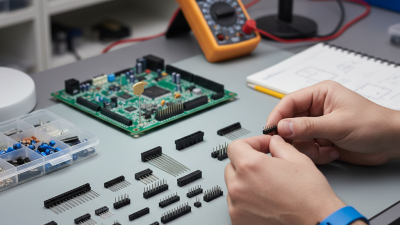


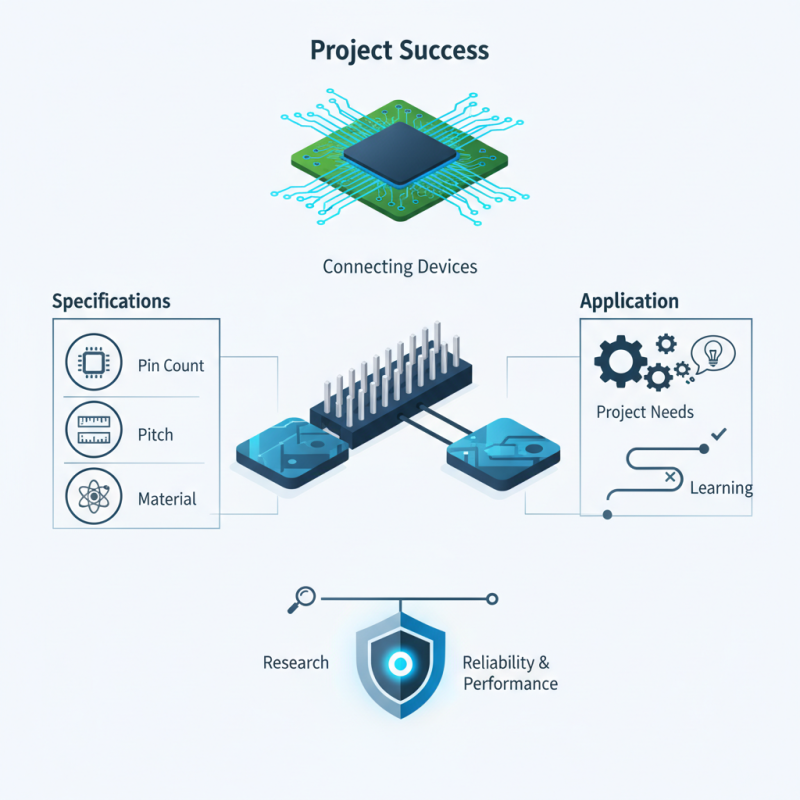
Choosing the right Socket Pin Header is crucial for the success of any electronic project. These components serve as the backbone for connecting various devices and ensuring reliable communication. Understanding their specifications can be overwhelming for many. However, the right choices can enhance efficiency and performance.
When selecting a Socket Pin Header, factors like pin count, pitch, and material should not be overlooked. High-quality materials can resist corrosion and improve longevity. Additionally, the correct pin count is essential for matching with your design requirements. Many engineers make mistakes here and overlook these details. It's not just about aesthetics; functionality is at stake.
While the technical aspects are important, familiarity with the specific application is equally vital. Each project may have unique needs that dictate the type of Socket Pin Header required. Experienced engineers often learn from past errors. Inadequate research can lead to significant roadblocks. Taking the time to understand your project's requirements will pay off in the long run.
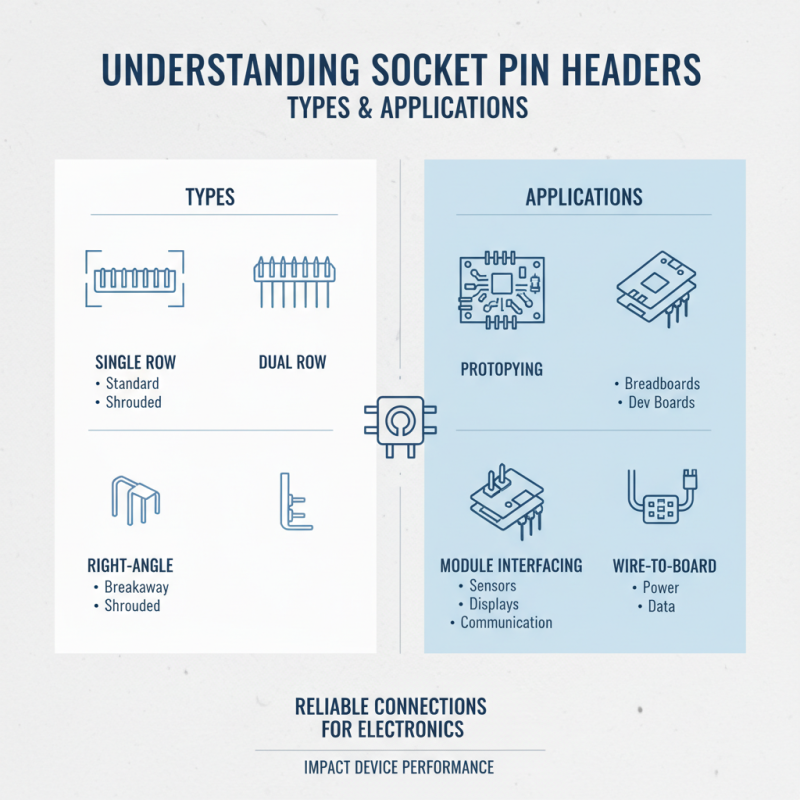
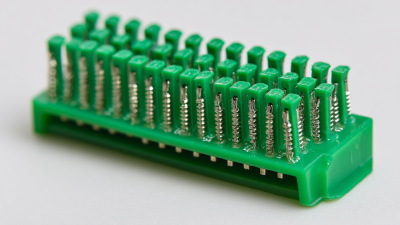
Socket pin headers are essential components in electronic projects. They provide a reliable connection for various applications. Understanding the different types of pin headers can significantly impact the performance of your device.
There are several types of socket pin headers available in the market. The most common varieties are single-row and dual-row headers. Single-row headers are compact and ideal for space-constrained designs. Dual-row headers offer greater versatility for connecting multiple pins. According to a recent industry report, nearly 40% of engineers prefer dual-row headers for prototypes due to their flexibility.
Applications of socket pin headers vary widely. They are used in everything from consumer electronics to industrial automation. Choosing the right type can avoid potential connectivity issues. In some cases, improper selection can lead to signal interference. It's vital to assess project requirements carefully. Engineers often overlook this step, leading to costly redesigns. Understanding your project's specific needs will guide you in selecting the most suitable socket pin header.
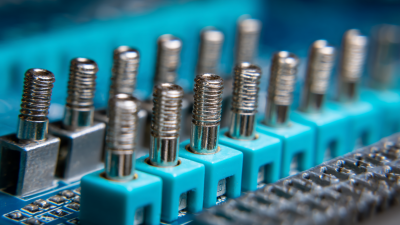
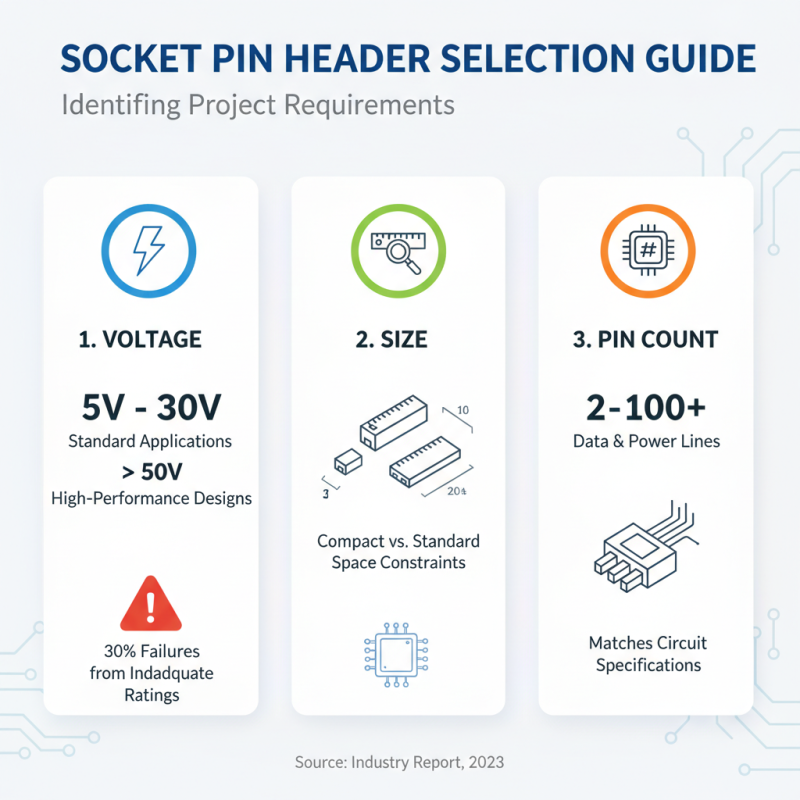
When selecting a socket pin header, understanding your project's specific requirements is crucial. Voltage levels determine the electric load that the header must handle. In most applications, headers are rated for 5V to 30V. However, high-performance designs may require ratings exceeding 50V. According to a recent industry report, 30% of electronic failures stem from inadequate voltage ratings. Ensure your selected header matches your circuit specifications.
Size also plays a critical role. Common pin header sizes include 2.54mm and 1.27mm pitch options. These dimensions impact space management on your PCB. Larger headers may allow for easier handling but can consume valuable real estate. An estimated 45% of engineers struggle with layout designs due to inadequate sizing. Understanding the spatial constraints can help avoid rework and project delays.
Finally, consider the pin count necessary for your application. Pin counts range from 2 to 40 and beyond. More pins enable complex connections but come with added complexity. Over-specifying pin requirements can lead to unnecessary costs and design complications. Reflect on what is truly needed for your project to optimize both performance and cost-effectiveness.
When selecting a socket pin header for your project, evaluating the material and construction is crucial. High-quality materials, such as phosphor bronze, enhance conductivity. This choice affects overall performance. Durability is essential, especially in demanding environments. Plastic housings should have heat resistance, ensuring longevity.
Construction also plays a vital role. Check for features like gold or tin plating on contacts. These finishes prevent corrosion and maintain reliable connections. Look for tightly fitted connector clips, which provide secure seating. When testing these components, you may find variations in quality. Some may fail under stress, while others excel.
In the end, consider the specific requirements of your project. Testing different options can help you find the balance between quality and cost. Not every component will meet your expectations, and that’s okay. Reflecting on these experiences can guide future decisions and improve your selection process.
When selecting socket pin headers, two primary options arise: solder and plug-in connectors. Each type has its advantages and drawbacks, impacting your project's design and functionality. Solder connectors provide a stable and permanent connection. They are ideal for designs that require a fixed setup. However, soldering demands precision and skill. Poor soldering can lead to weak connections. This can affect overall performance.
On the other hand, plug-in connectors offer flexibility. They allow quick assembly and disassembly. This is beneficial for prototyping or if changes are expected in the design. However, reliance on plug-in options may result in loose connections over time. If used in a vibration-heavy environment, this could become problematic. It's essential to weigh these factors carefully.
Consider the specific needs of your project. Ask yourself if ease of use or durability is more critical. Your choice will depend on the long-term goals. Reflect on the environment where your connector will be used. This assessment will guide you to the most suitable option for your needs.
Choosing the right socket pin header is crucial for your project's success. Proper installation considerations can significantly impact the overall performance. Alignment is one of the key factors. Misalignment may lead to poor electrical connections. According to industry reports, 30% of connection failures can be traced back to improper alignment during installation.
Space constraints matter too. Projects often have limited board real estate. Selecting the right dimensions for your socket pin header ensures that components fit seamlessly. A study by the Electronics Industry Association showed that nearly 40% of design failures resulted from space incompatibilities. This highlights the importance of precision in design layouts.
Compatibility cannot be overlooked. Ensure your socket pin header matches the specifications of the components being used. Not all headers perform well with every type of connector. The mismatch can lead to unreliable operation, increasing the risk of project delays. It’s critical to review datasheets and consult technical documentation. Sometimes a small oversight can cause significant headaches later in the process. Taking the time to double-check compatibility can save hours of troubleshooting in the future.
This chart illustrates the importance of various criteria when choosing a socket pin header for project applications. Key considerations include alignment for proper fitting, space availability on the PCB, compatibility with other components, cost management, and the durability of the headers.