10 Tips for Choosing High Frequency Connectors Today?
Choosing the right high frequency connector can be challenging. These components play a crucial role in ensuring trusted performance in various applications. Therefore, making a well-informed choice is essential.
Understanding the specific requirements for your project is vital. High frequency connectors must meet several standards to ensure efficiency and reliability. Factors like frequency, size, and power ratings all influence your decision. Additionally, consider the connector's material and design for durability and performance.
Moreover, many manufacturers offer diverse options, making selection overwhelming. It’s essential to review technical specifications and user reviews. This can help gauge quality and usability. Don’t overlook the importance of expert recommendations. They provide valuable insight. Engaging with engineers or industry professionals can guide you in making the best choice for your needs. Consider these factors carefully as you aim for optimal connectivity in your applications.
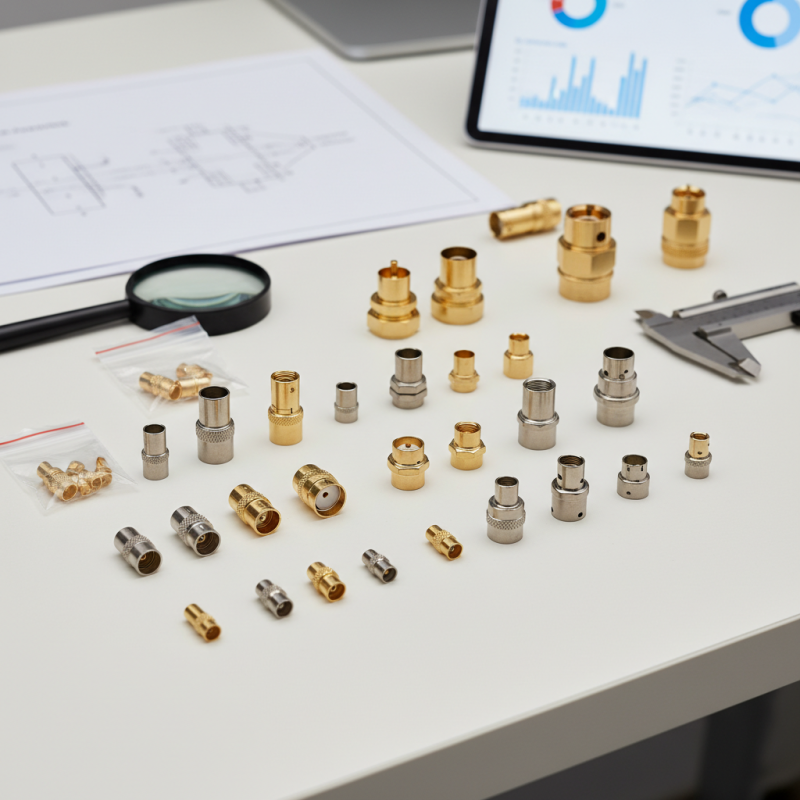
Key Specifications to Consider for High Frequency Connectors
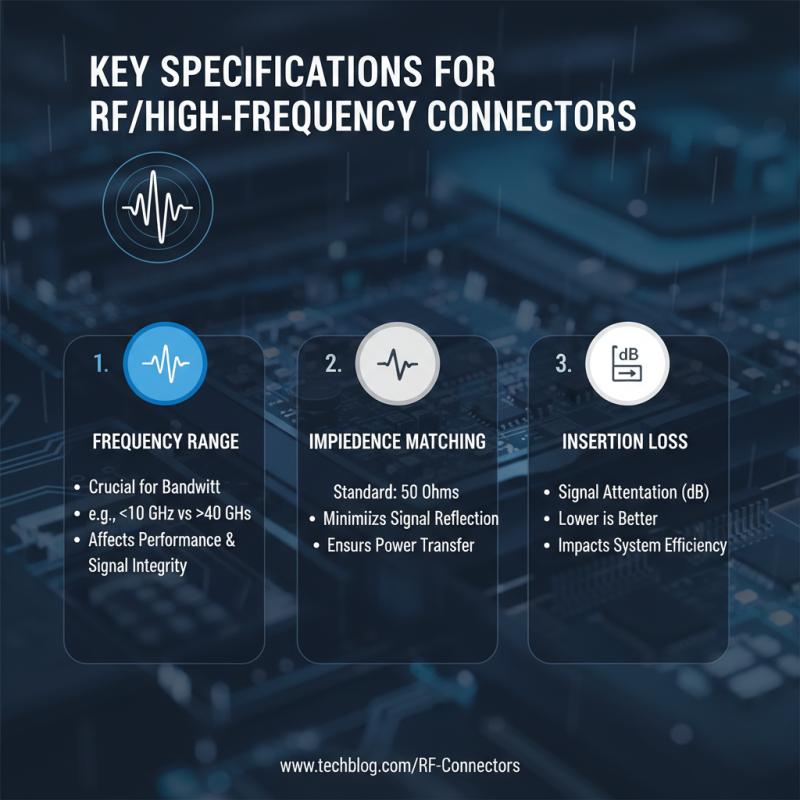
When selecting high frequency connectors, certain specifications are crucial. First, consider the frequency range. Ensure the connectors operate effectively within your application’s required bandwidth. For instance, some connectors may function well up to 10 GHz, while others may exceed 40 GHz. This directly affects both performance and signal integrity.
Another important aspect is the insertion loss. Low insertion loss is vital in high frequency applications to minimize signal degradation. Aim for connectors that offer less than 0.2 dB of insertion loss at target frequencies. Additionally, pay close attention to return loss specifications; higher return loss typically indicates better performance, allowing optimum signal transmission.
Mechanical design also plays a role in connector performance. Look for robust materials that can withstand environmental factors. The connector's mating process should also be straightforward to avoid mishaps in high-stress situations. There's a balance between durability and ease of use that needs careful consideration. The importance of these details cannot be overstated. Ignoring them may lead to unnecessary complications down the line.
Understanding Impedance Matching in High Frequency Applications
Impedance matching is crucial in high-frequency applications. It ensures that signals are transmitted effectively, minimizing reflections. When a connector's impedance matches the system, signal integrity improves. Mismatched impedance can lead to significant losses, impacting overall performance.
Understanding the characteristics of the connectors is vital. They must support the operating frequency without degrading the signal quality. Pay attention to the connector's specifications. Look for parameters such as return loss and voltage standing wave ratio (VSWR). These factors indicate how well the connector maintains the signal's integrity.
Reflect on the installation environment. Factors like temperature and humidity can affect performance. Be wary of how physical connections are made. Poor soldering or mechanical strain can introduce issues, even with quality connectors. Regular testing can reveal hidden problems that compromise performance.
Evaluating Frequency Range and Electrical Performance Ratings
When selecting high frequency connectors, evaluating the frequency range is crucial. Each connector has a maximum frequency limit, often expressed in gigahertz (GHz). This range is pivotal for ensuring the connector can work efficiently in your application. Ignoring this might lead to signal loss or distortion. Consider the environment too. High frequencies can be more susceptible to interference.
Electrical performance ratings are equally important. Look for connectors with low insertion loss and high return loss. These ratings are indicators of how well the connector maintains signal integrity. Poor ratings can severely affect system performance. Sometimes, manufacturers provide charts that visualize these parameters. Analyzing them can clarify which connectors best suit your needs.
Even the best connectors require occasional reassessment. Factors like temperature, humidity, and mechanical stress can impact their performance. Regular testing can prevent potential failures. Choosing a connector is not just a one-time decision; it’s an ongoing process. Balancing technical specifications with real-world conditions is essential for success.
High Frequency Connectors Performance Evaluation
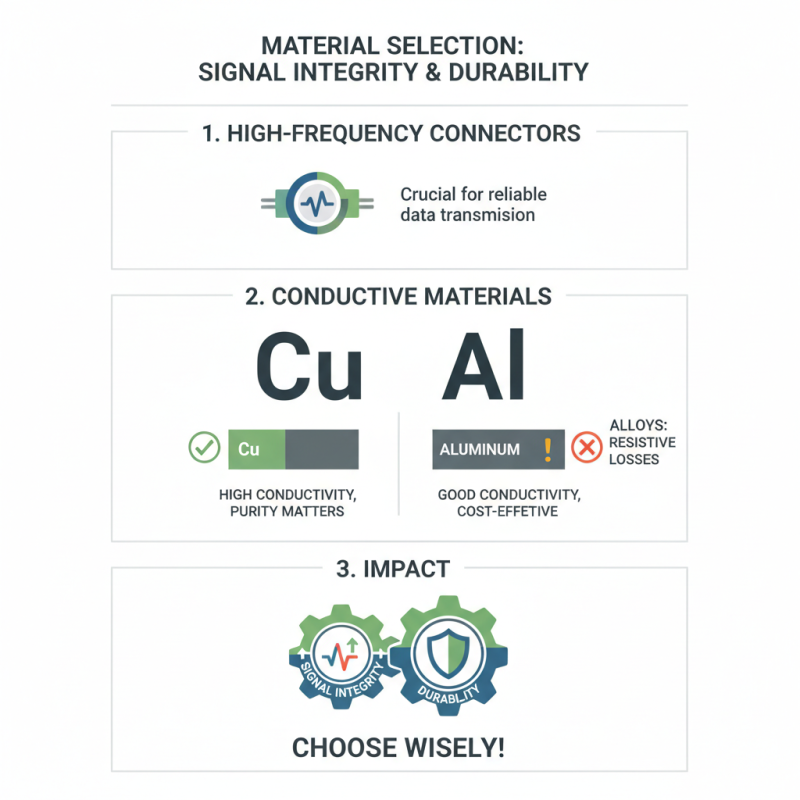
Material Selection: Impact on Signal Integrity and Durability
Selecting the right materials for high-frequency connectors is crucial. Signal integrity relies heavily on the materials used. Copper and aluminum are common choices for conductive parts. They offer good conductivity but can vary in performance based on their purity levels. An alloy might seem appealing, yet it may introduce unwanted resistive losses.
Durability is another key factor. Materials like teflon or ceramic can enhance longevity. These materials withstand heat better, but they can also be more expensive. It's essential to consider the trade-off between cost and reliability. Sometimes, a choice that seems economically reasonable could lead to long-term failures.
Conductive plating also plays a critical role. Gold plating provides excellent conductivity and corrosion resistance, but it can be overkill for certain applications. While silver is highly conductive, it tarnishes easily, potentially harming signal integrity. Balancing performance with practicality is a challenge. Engaging in a thorough analysis of material choice can avoid pitfalls later. The stakes are high in high-frequency applications, and making informed decisions is essential.
Cost vs. Performance: Balancing Budget and Quality in Connector Choices
When selecting high-frequency connectors, balancing cost and performance is crucial. Many users face pressure to reduce costs. However, cheaper components may compromise reliability. Understanding the trade-offs is vital for making informed decisions.
One tip is to assess your project's requirements. Is durability a priority? How often will connectors be used? Answering these questions helps narrow down options. Furthermore, not all high-performance connectors come with a high price tag. Some affordable choices offer excellent performance specifications.
Another key consideration is to research the materials and construction. Materials influence performance in high-frequency applications. Plastic housings may be lighter but can affect signal integrity. On the other hand, metal housings may provide better shielding. It’s essential to weigh these factors against your budget. Explore various materials and their impact on performance.
Finally, it's wise to seek advice from experts or communities. Their experiences can shed light on potential pitfalls. Relying solely on data sheets may not reveal real-world performance issues. Engaging with professionals or user reviews fosters a deeper understanding. This combination of informed choices and shared knowledge can lead to successful connector selections.

 Email
Email WeChat